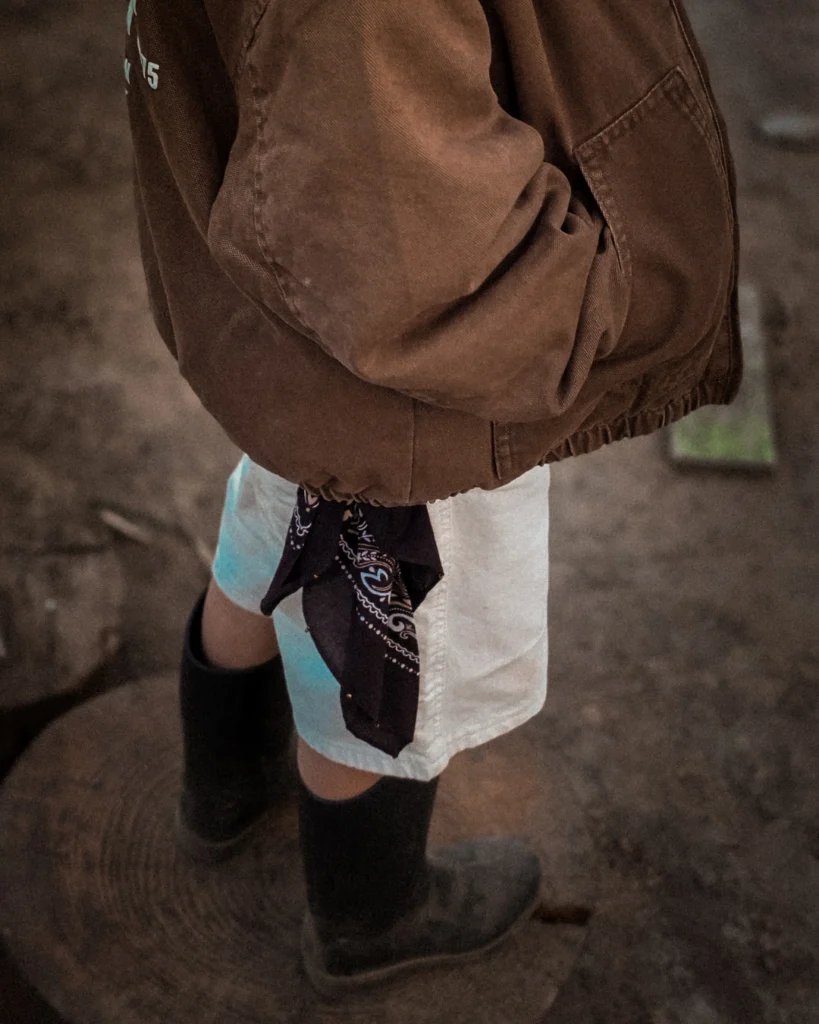
I. He always runs. That is the first thing you notice about him the way he arrives everywhere slightly out of breath, jacket open, boots loud on the dirt path. He doesn’t know yet that there is no hurry. That the greenhouse will still be there. That the grandfather will still be there, moving at exactly the same pace he moved yesterday, and the day before, and for forty years before that.
The morning is cold in the way early spring mornings in the north are cold not the sharp cold of January, but something gentler and more honest. A cold that knows it is leaving. The last of the winter crops are still holding on. For a few more days, at least.
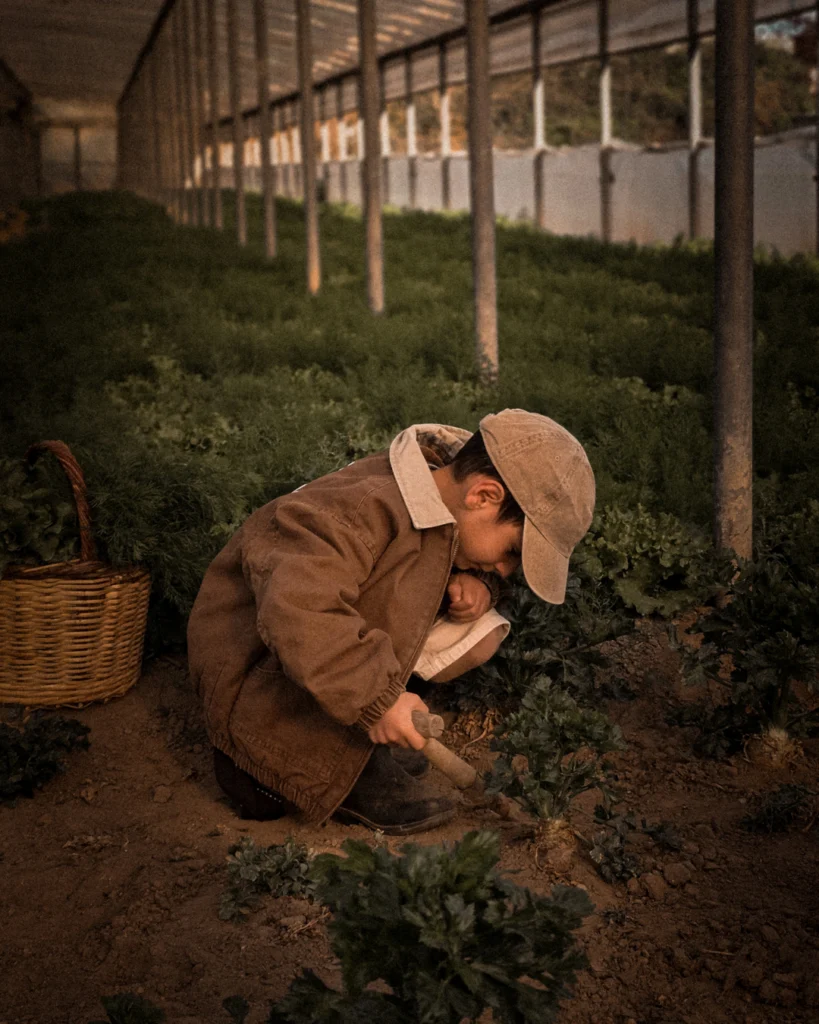
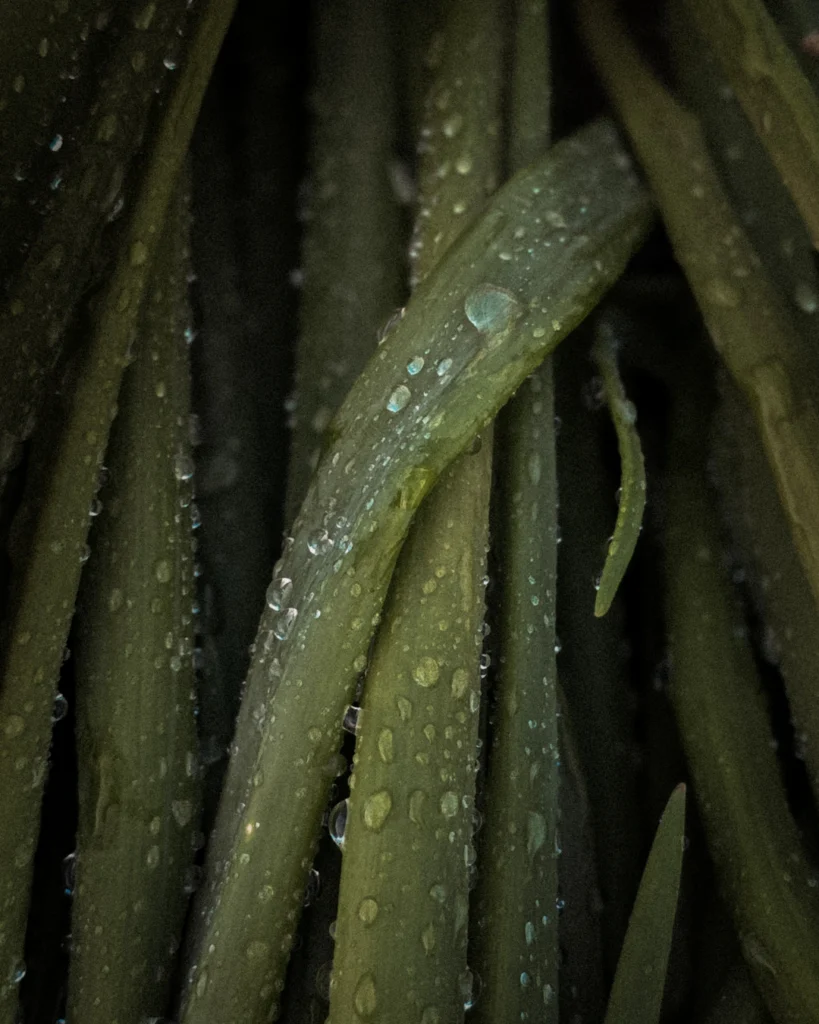
II. The cucumbers hang heavy with the memory of last night’s rain. Each drop balanced on the dark skin like something placed there deliberately, like someone arranged them and walked away. The boy crouches down not because he was told to, but because something in the image demands it. This is how he learns to see. Not from textbooks. From standing still in a cold greenhouse in March and watching the light move through water.
The grandfather passes behind him without a word. He has seen the cucumbers. He saw them before the boy was born.
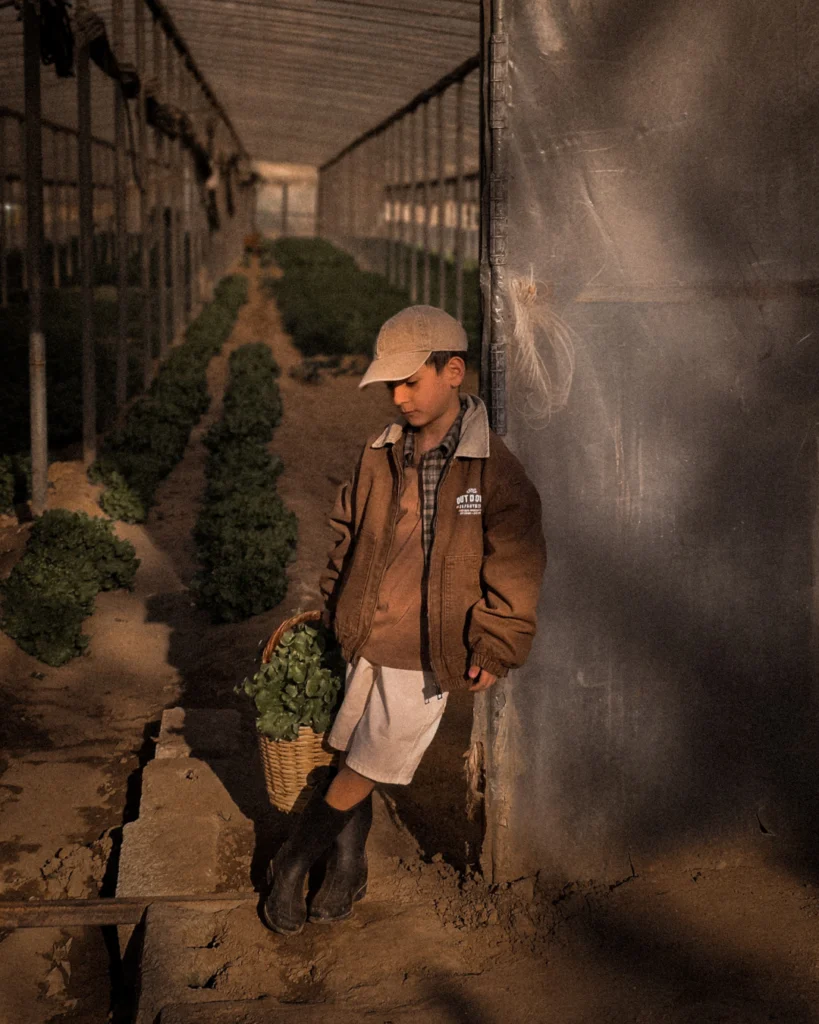
III. Watch the grandfather work for ten minutes and you begin to understand something that cannot be taught in words. There is no wasted movement. Every bend of the knee, every reach of the arm, every moment of stillness it all belongs to a rhythm that was not invented but discovered, slowly, over a lifetime of mornings like this one.
He does not explain. He does not demonstrate. He simply works, and the boy is there, and that is enough.
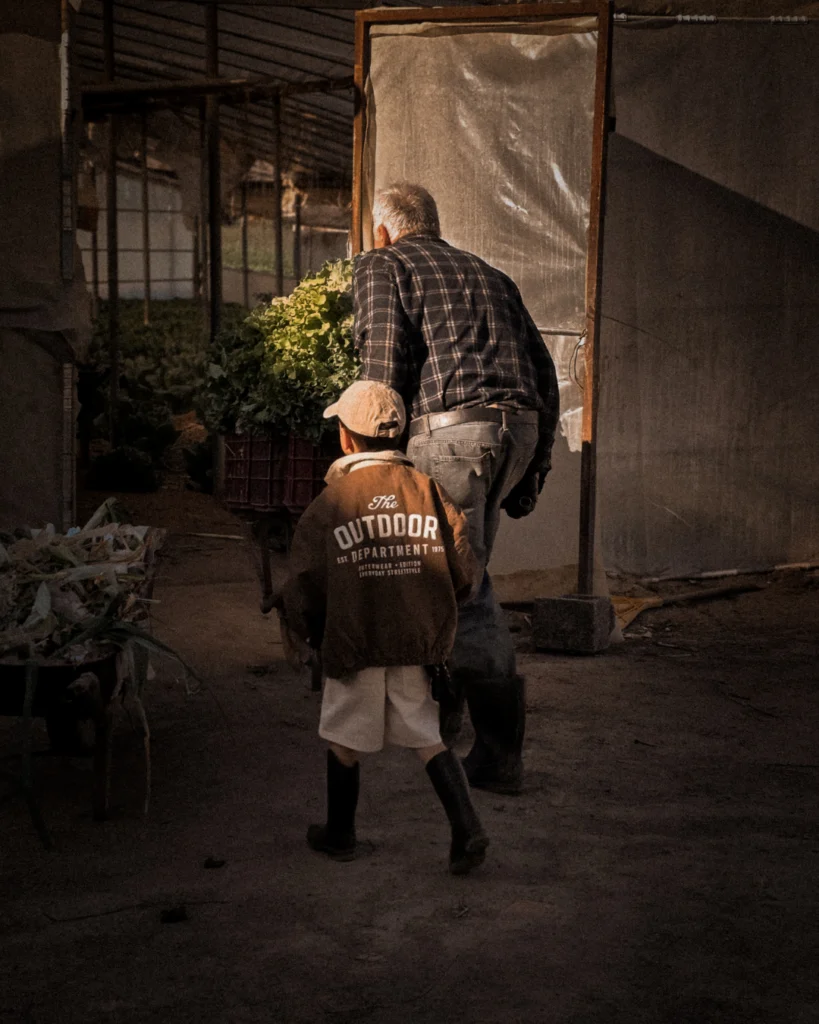
This is how trust is handed down. Not with words. With a turned back.
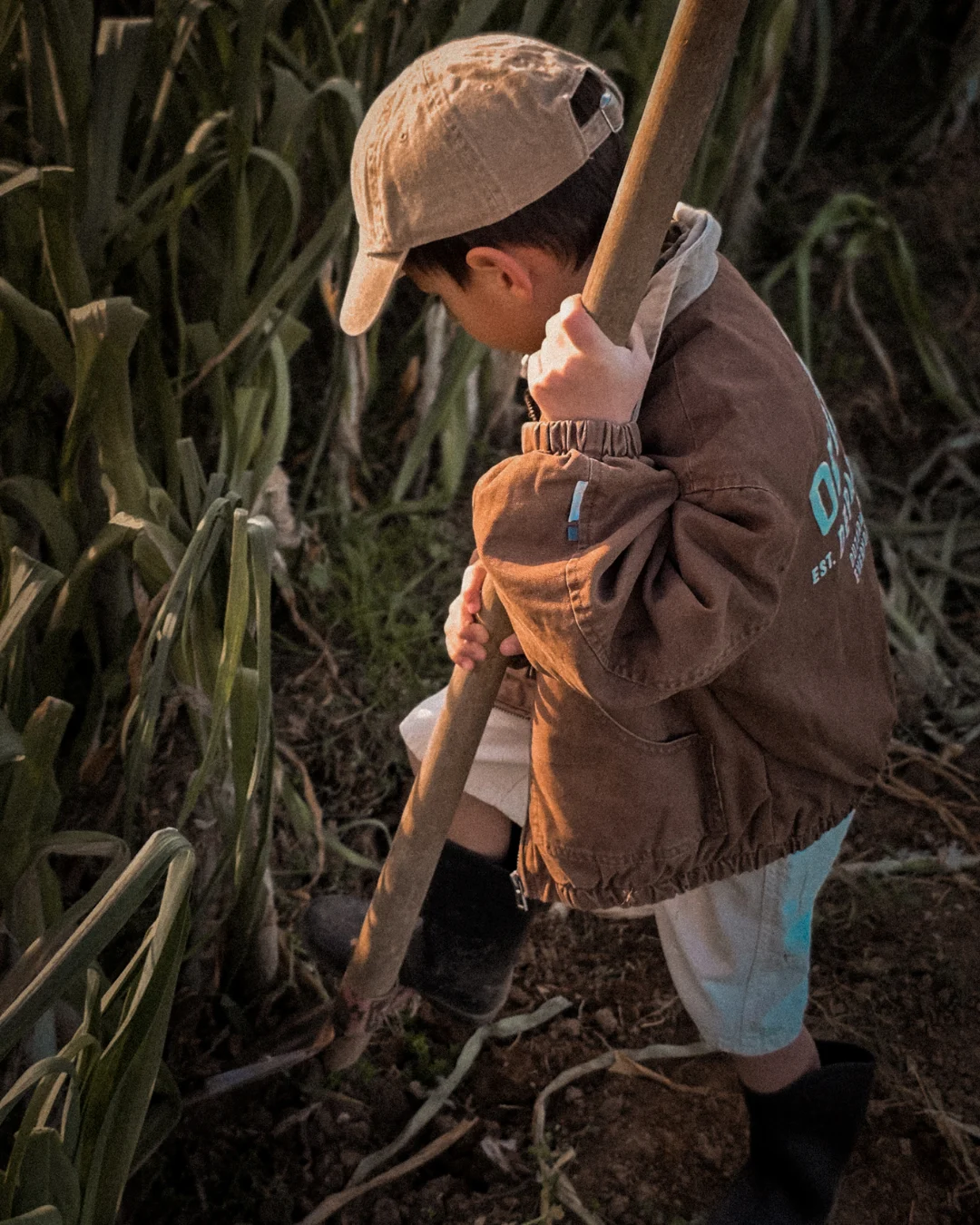
oy cannot say exactly when he picks up the handle of the wheelbarrow. It is heavier than it looks. He knows this now. His hands adjust. His stance widens slightly. The grandfather does not turn around to check. He already knew.
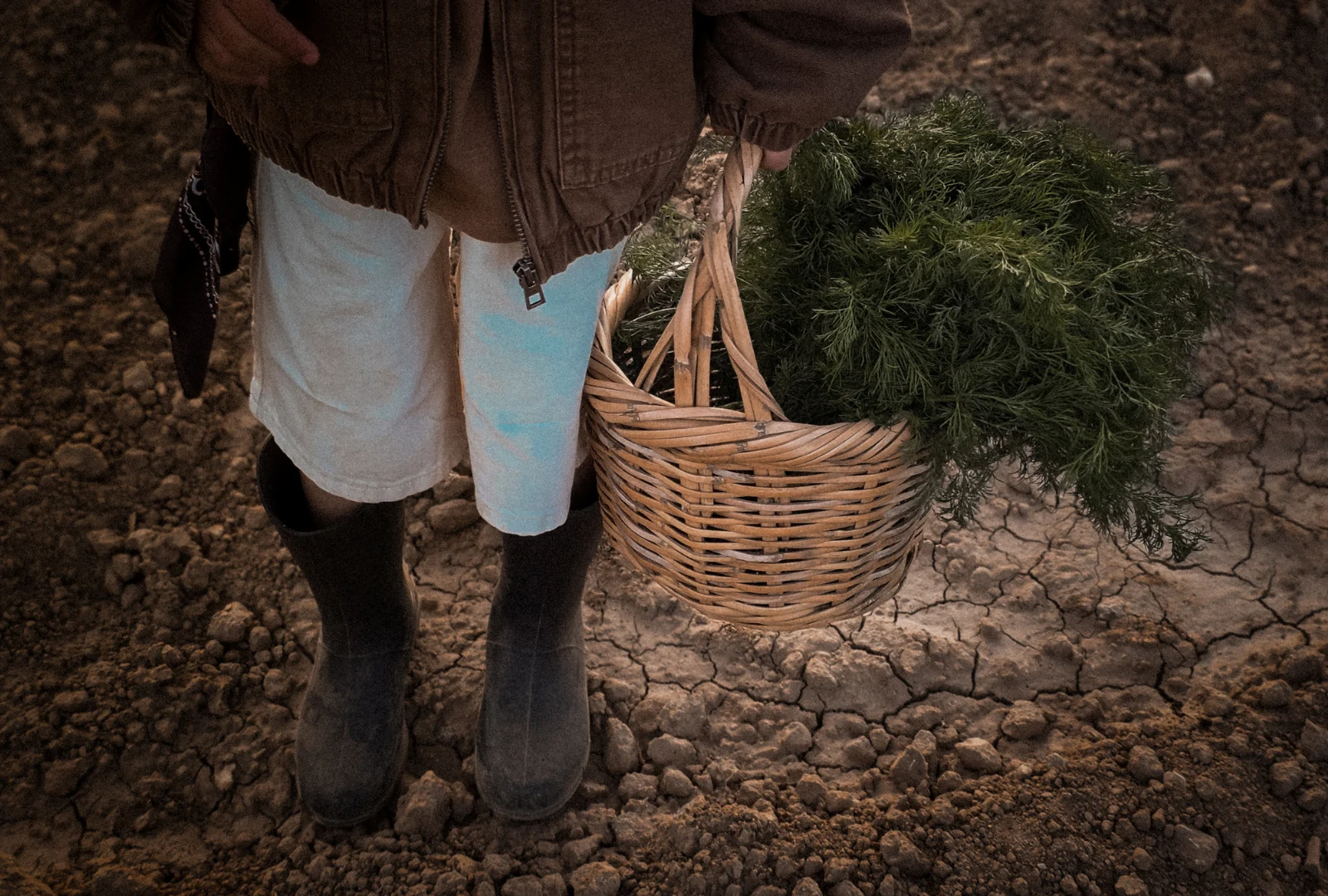
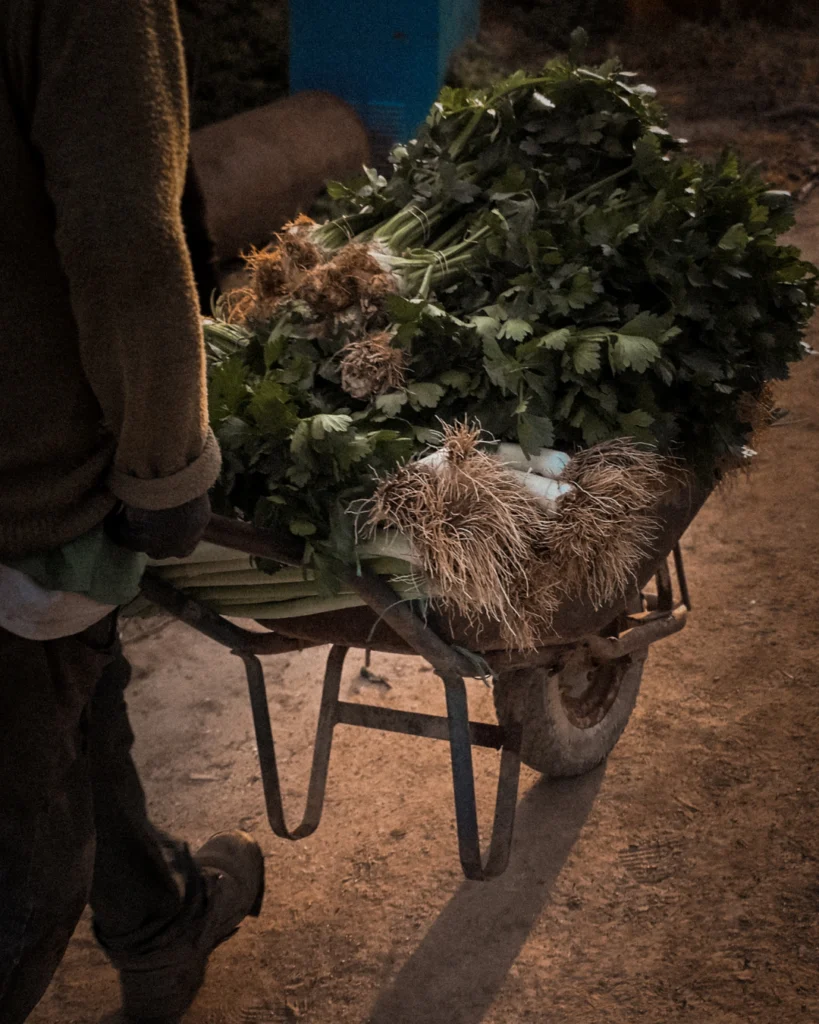
IV. The baskets fill slowly. Spinach, lettuce, the last of the leeks vegetables that carry winter inside them, dense and dark and serious. The boy has learned their names but not yet their weight. Not the real weight the kind that lives in the knowledge that this is the last harvest before the ground changes, before the spring crops take over, before everything becomes lighter and faster and less patient.
He sits for a moment among the leek leaves, surrounded by the smell of earth and cut green. He is not resting. He is thinking. Or perhaps not thinking at all just being in the place, in the smell, in the cold air that comes through the gaps in the plastic walls.
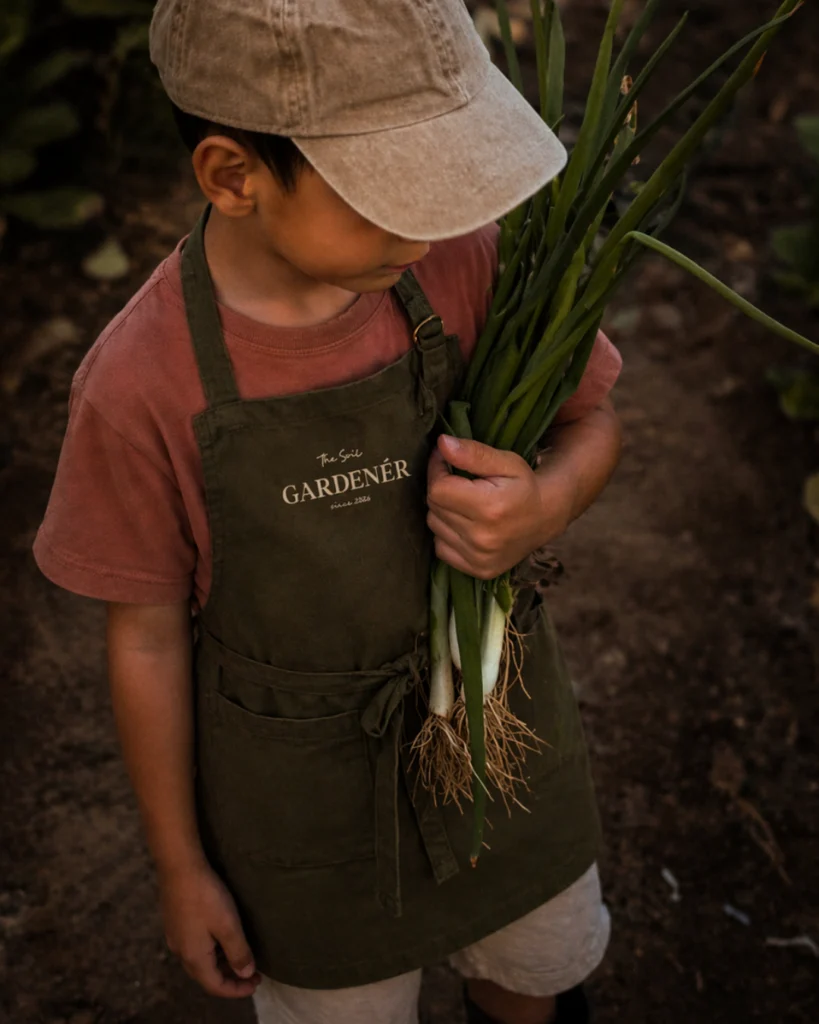
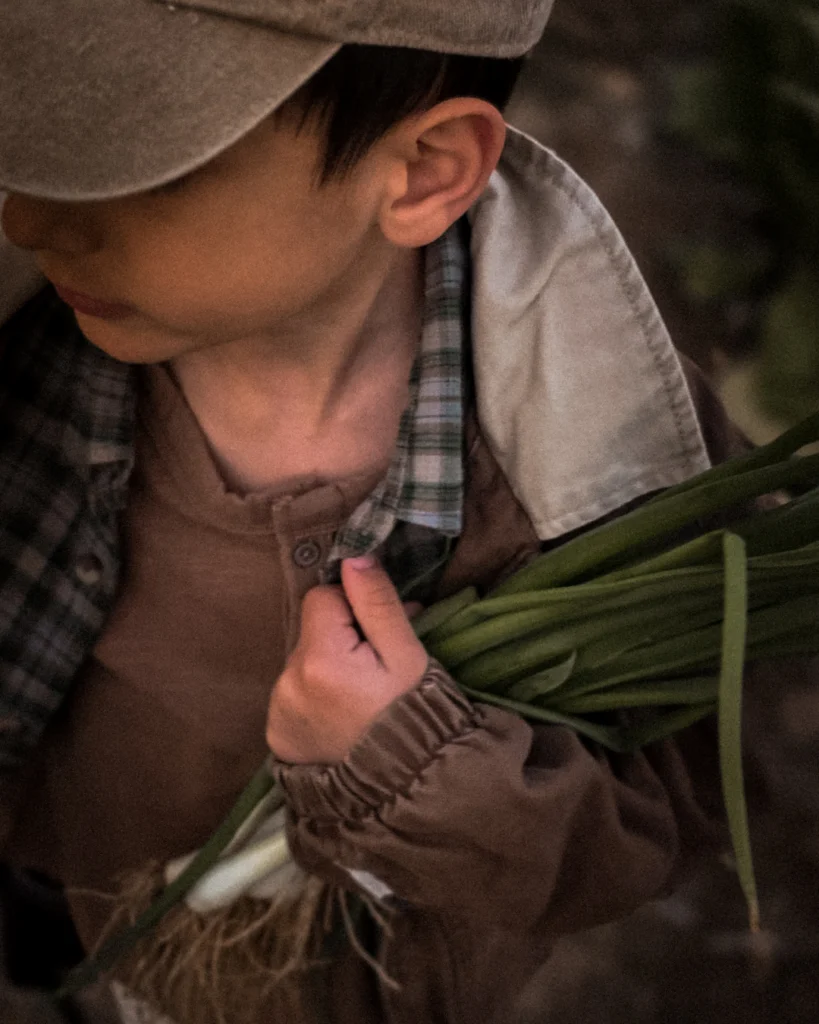
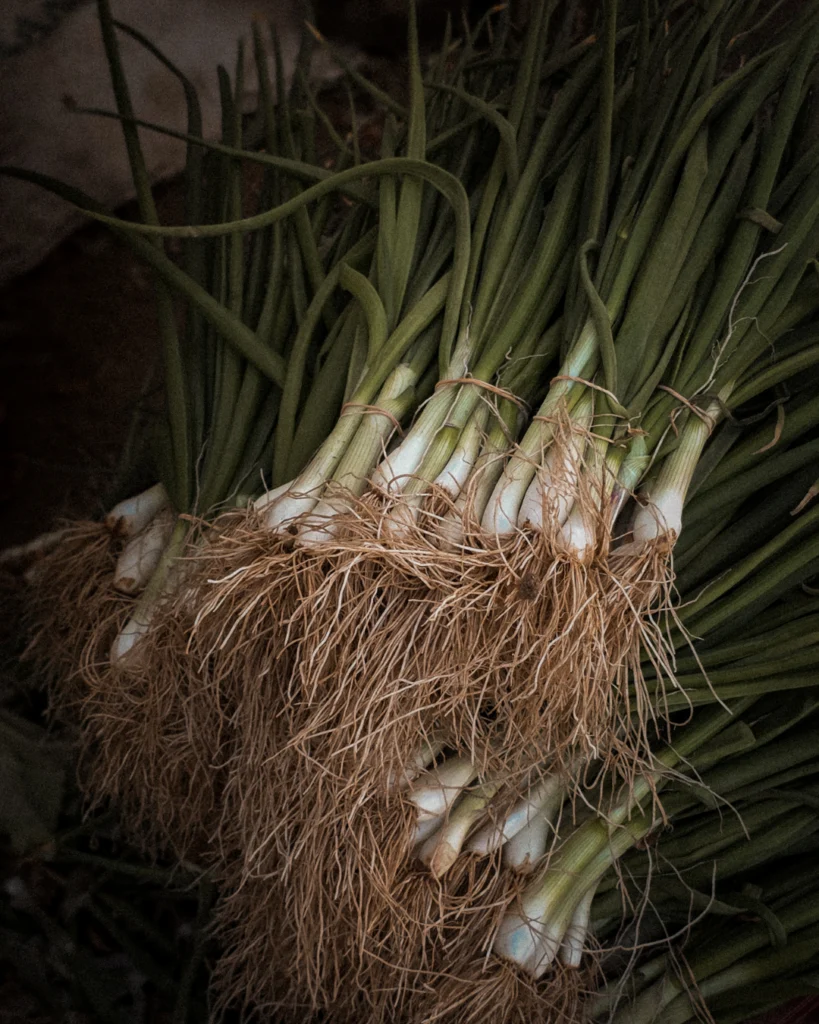
The spring onions have been bundled and laid on the ground with a precision that is almost ceremonial. Someone who cares did this. That much is clear.
V. At the end of the day, the grandfather walks out the way he walked in without ceremony. Jacket, cap, the easy stride of a man who has nowhere else to be and knows it. He carries a bundle of something green under his arm. He does not look back.
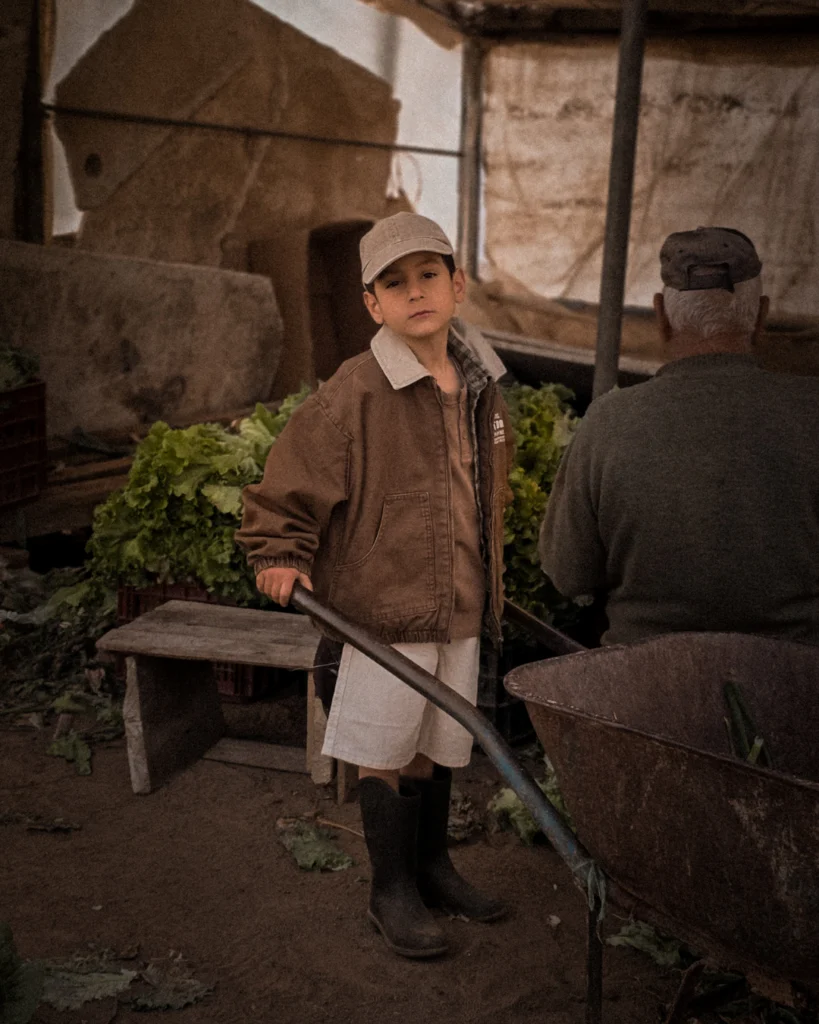
The boy watches him go. And in that watching, something shifts. Not dramatically. Not the way it happens in films, with music and slow motion. Just a quiet shift — the way a door settles into its frame at the end of the day.
He will be back tomorrow. They both will. And the day will be the same, and completely different, and that is the point.
Credits
Photography by Growing Creative Sprouts
Art Direction by Dad
Garments by Zara