
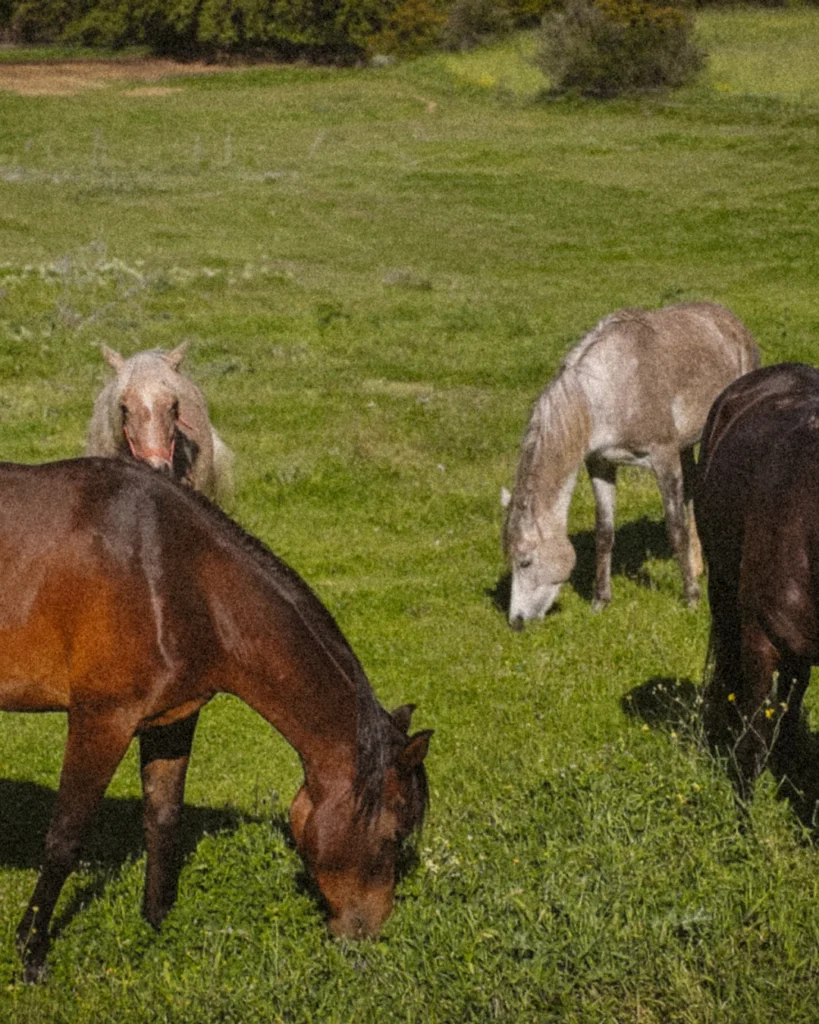
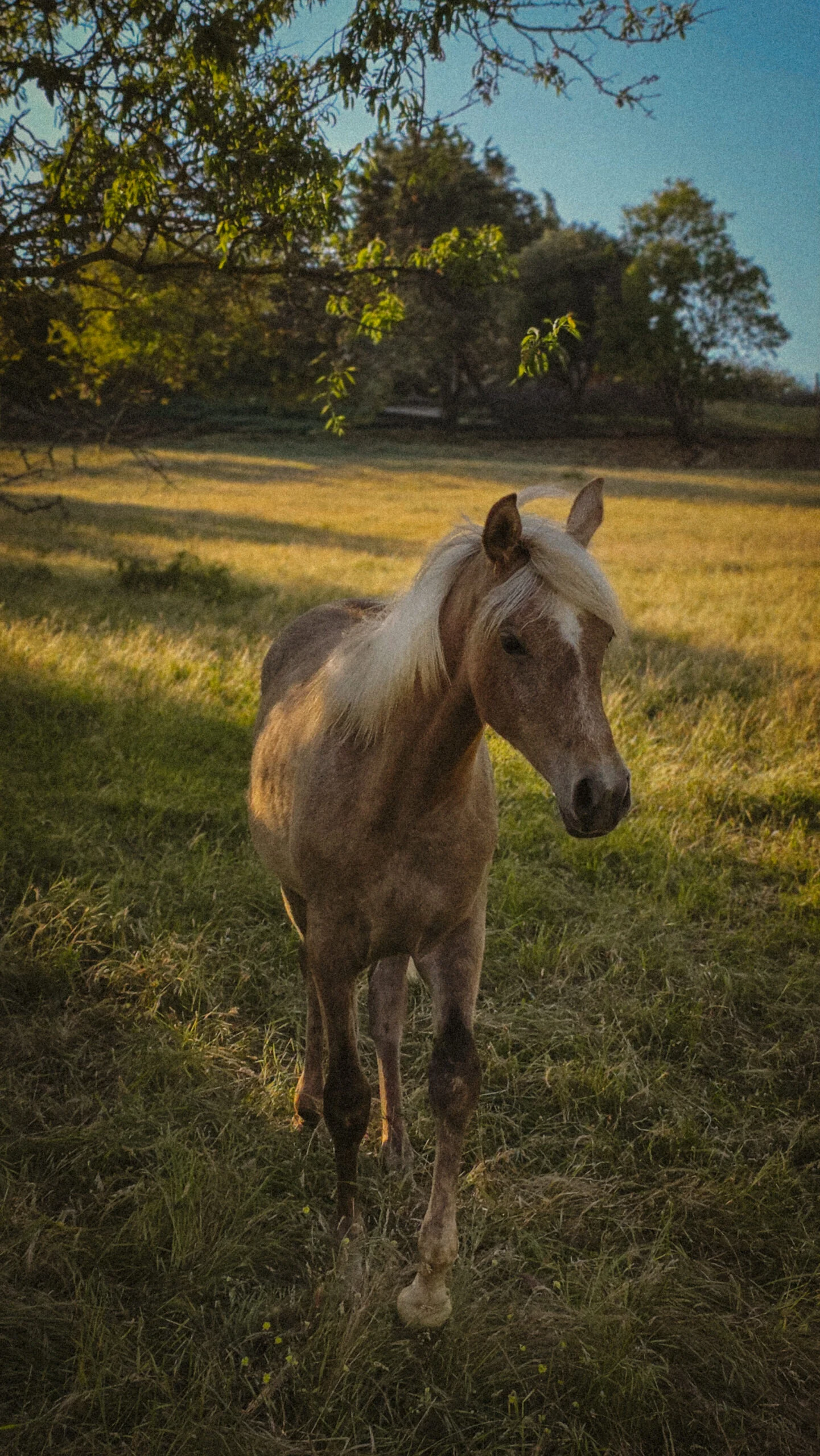
The horses belong to the neighbor. But that is a technicality. A piece of paper. Out here, in the wide spring fields of the north, with the poppies just starting and the grass too green to be true, ownership is a word that doesn’t quite fit. The horses go where they go. They always have.
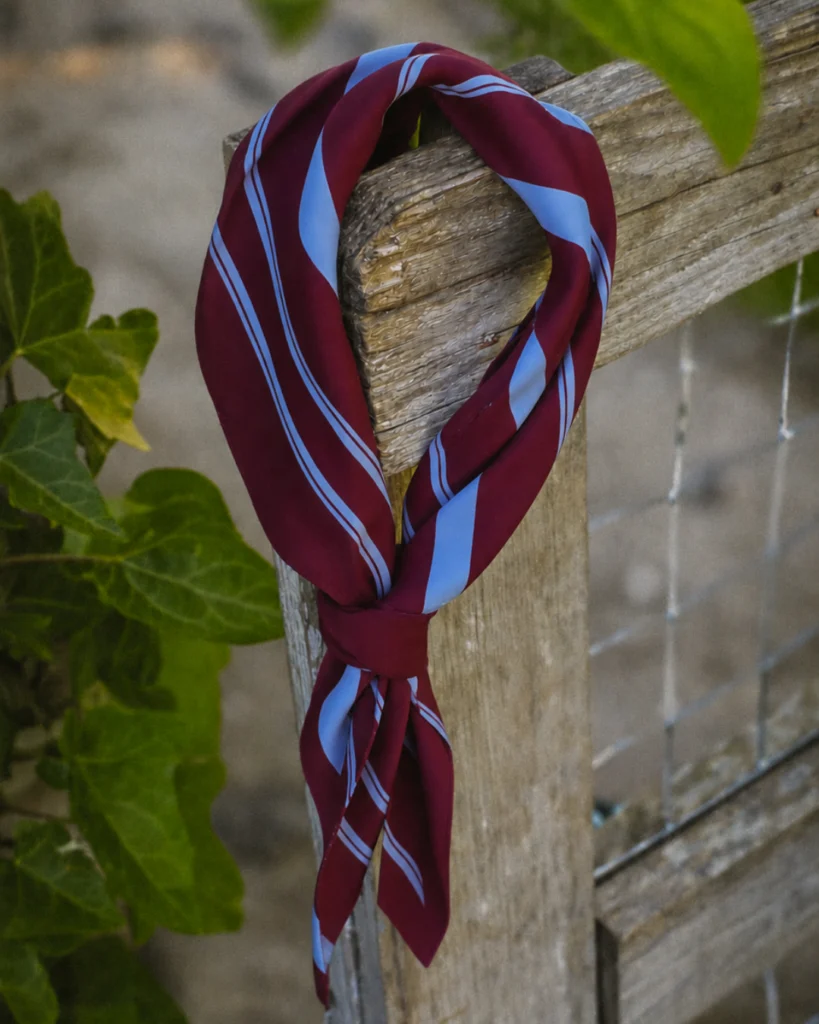
II. He tied the bandana to the post before anything else.
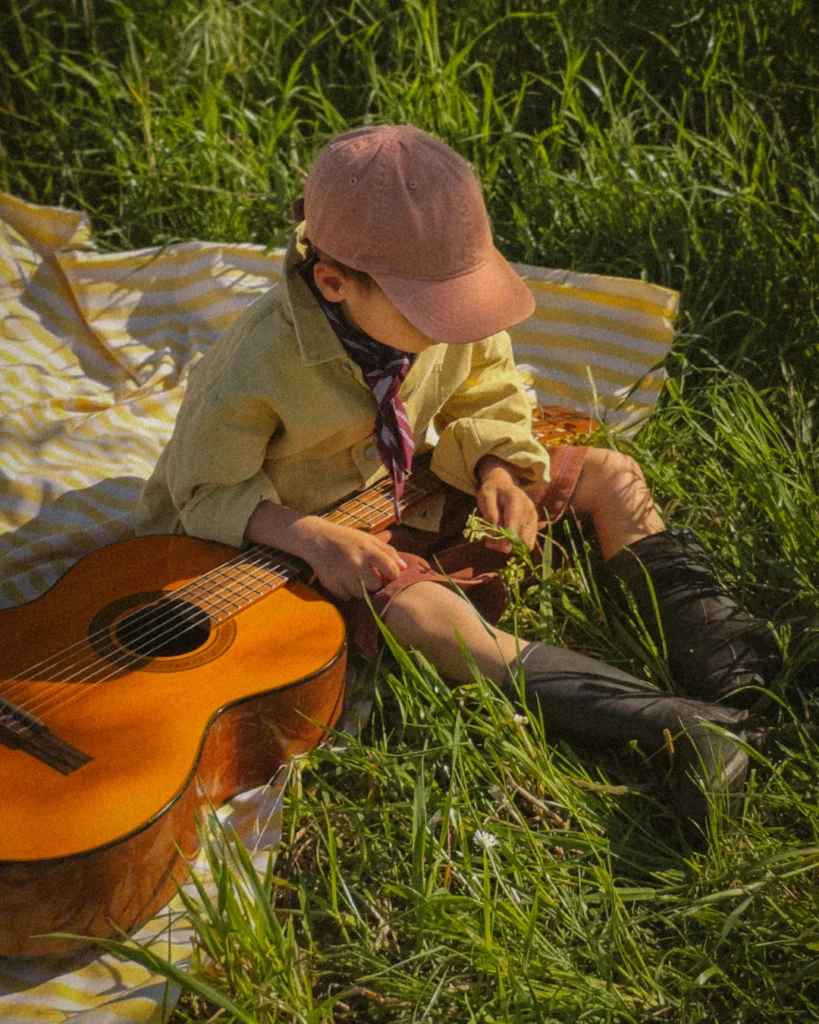
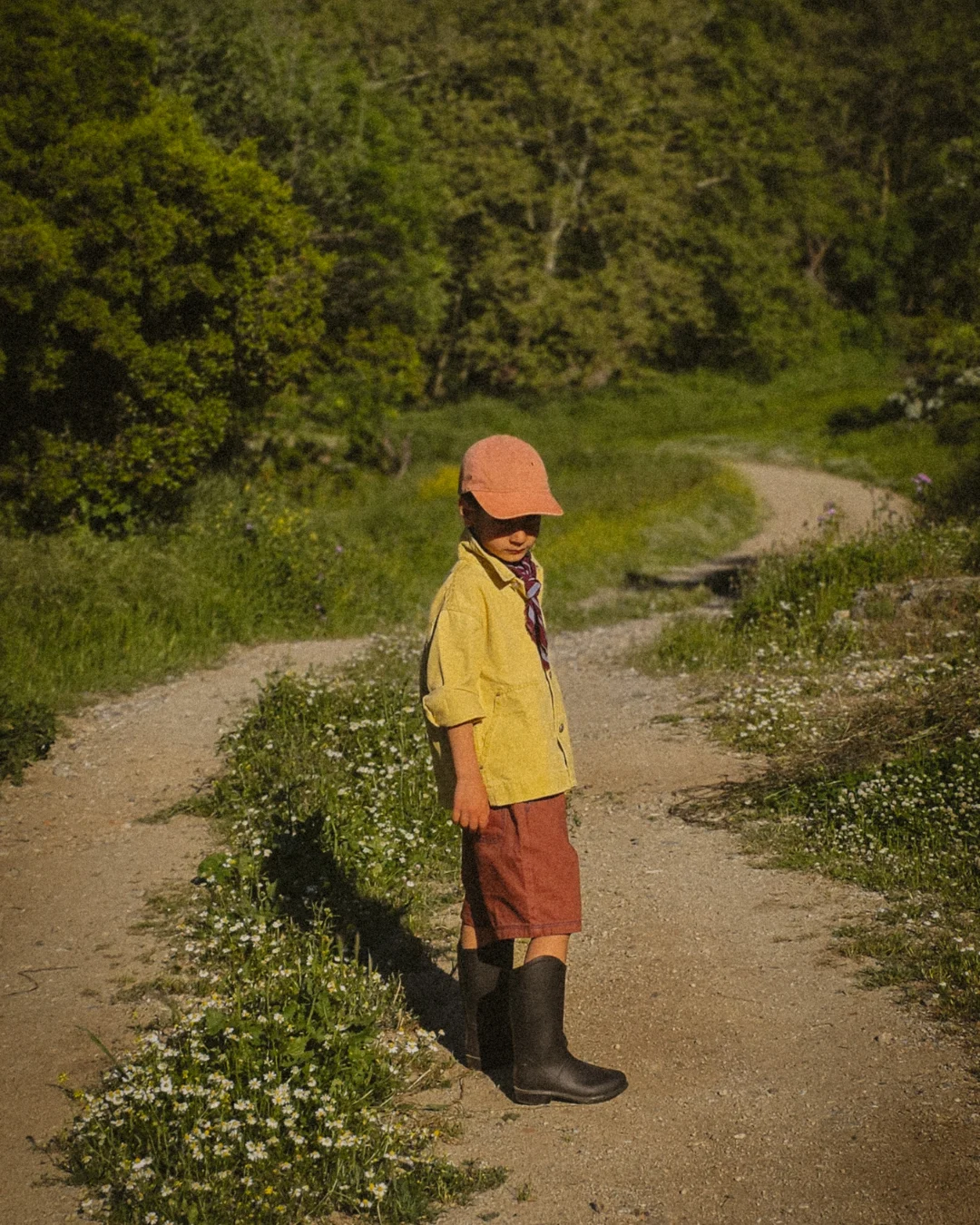
This is what he does. Before the blanket is spread, before the apples are arranged, before the guitar is tuned to no particular key the bandana comes off and goes on the post. Burgundy and blue against old grey wood. It means: I was here. It means: this afternoon is mine.
He has worn it so many times that it has taken on something of him the way things do when they are truly used, truly lived in. It is not an accessory. It is part of the vocabulary of who he is on days like this, in fields like this, when there is nowhere to be and all the time in the world to get there.
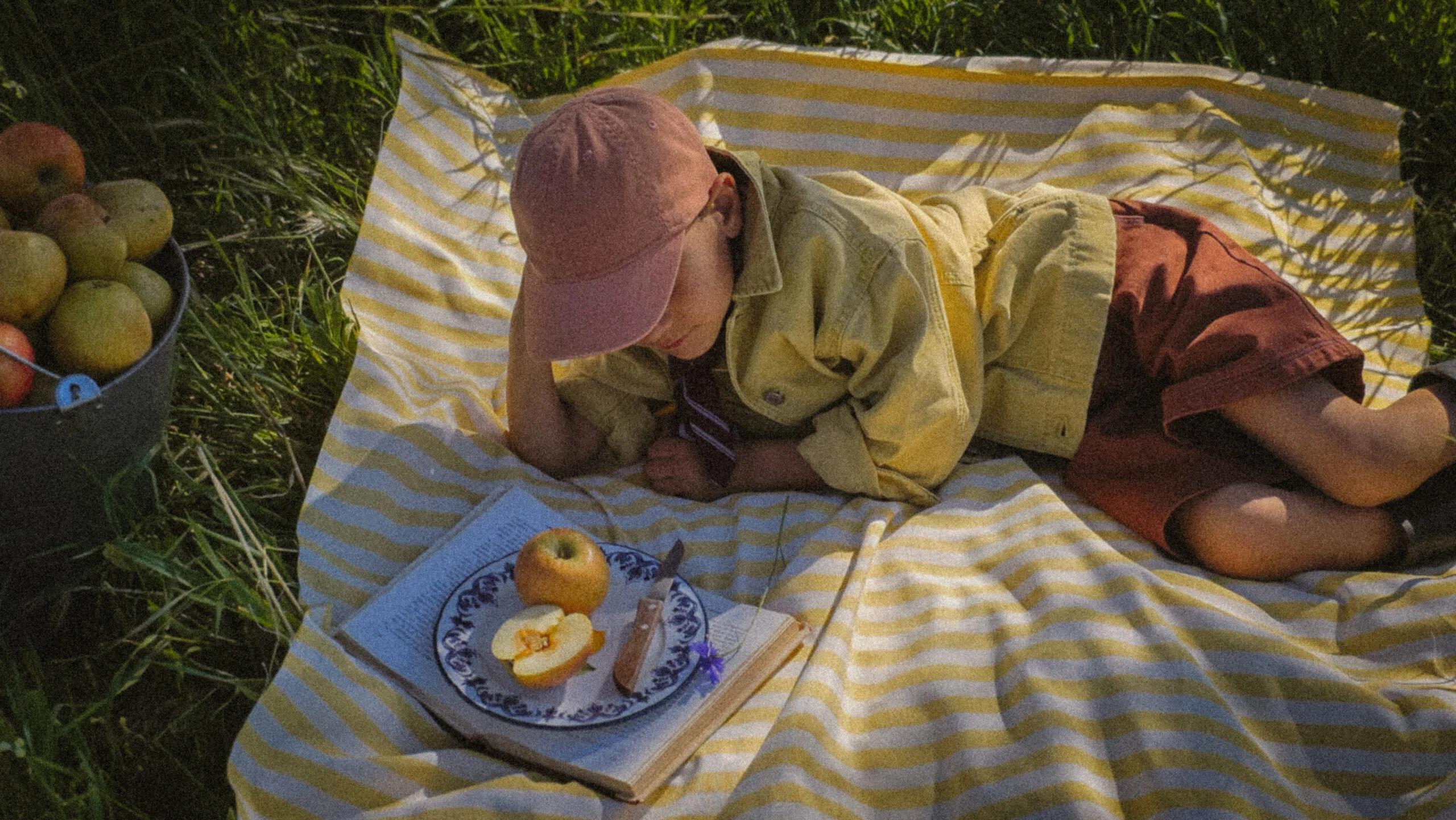
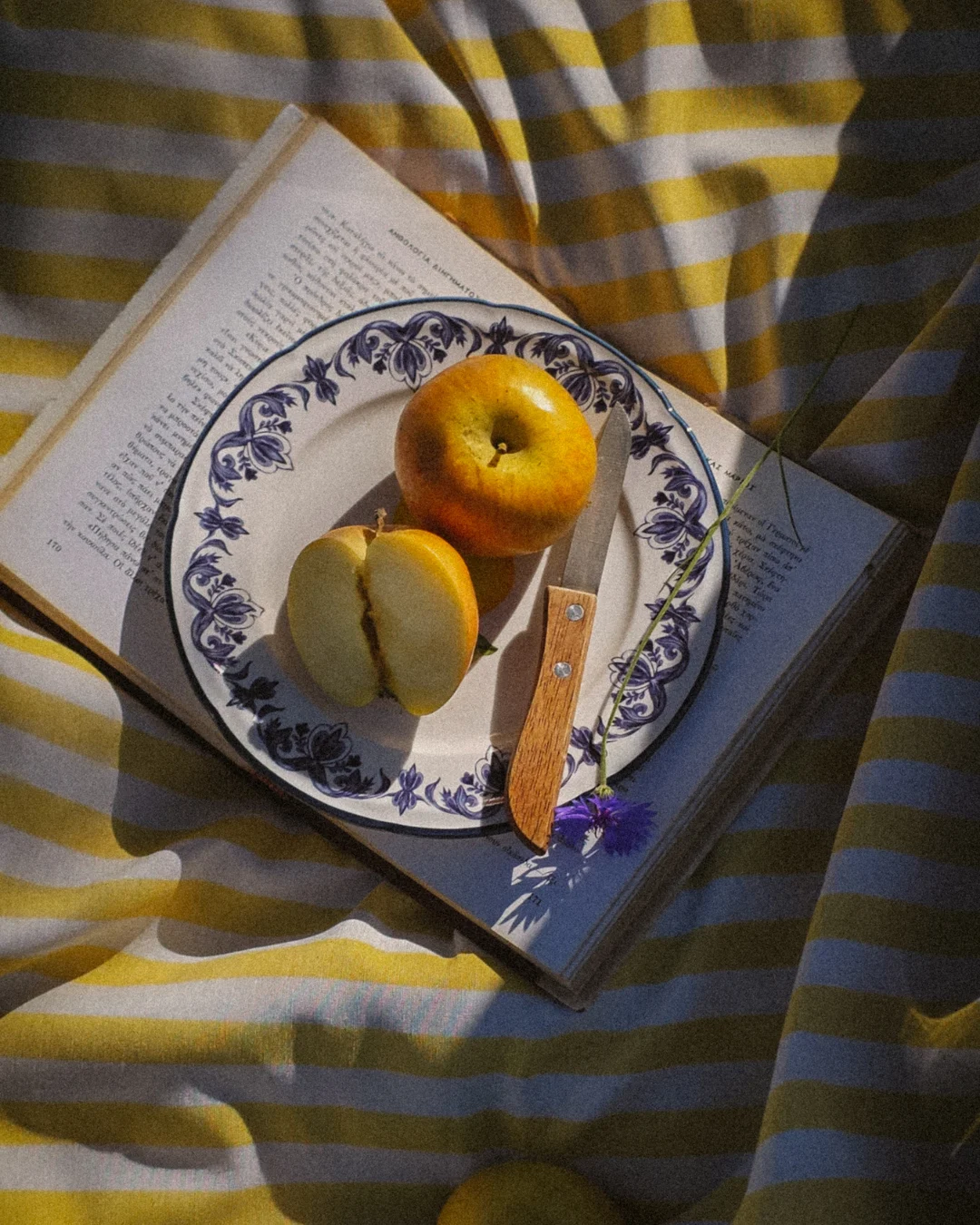
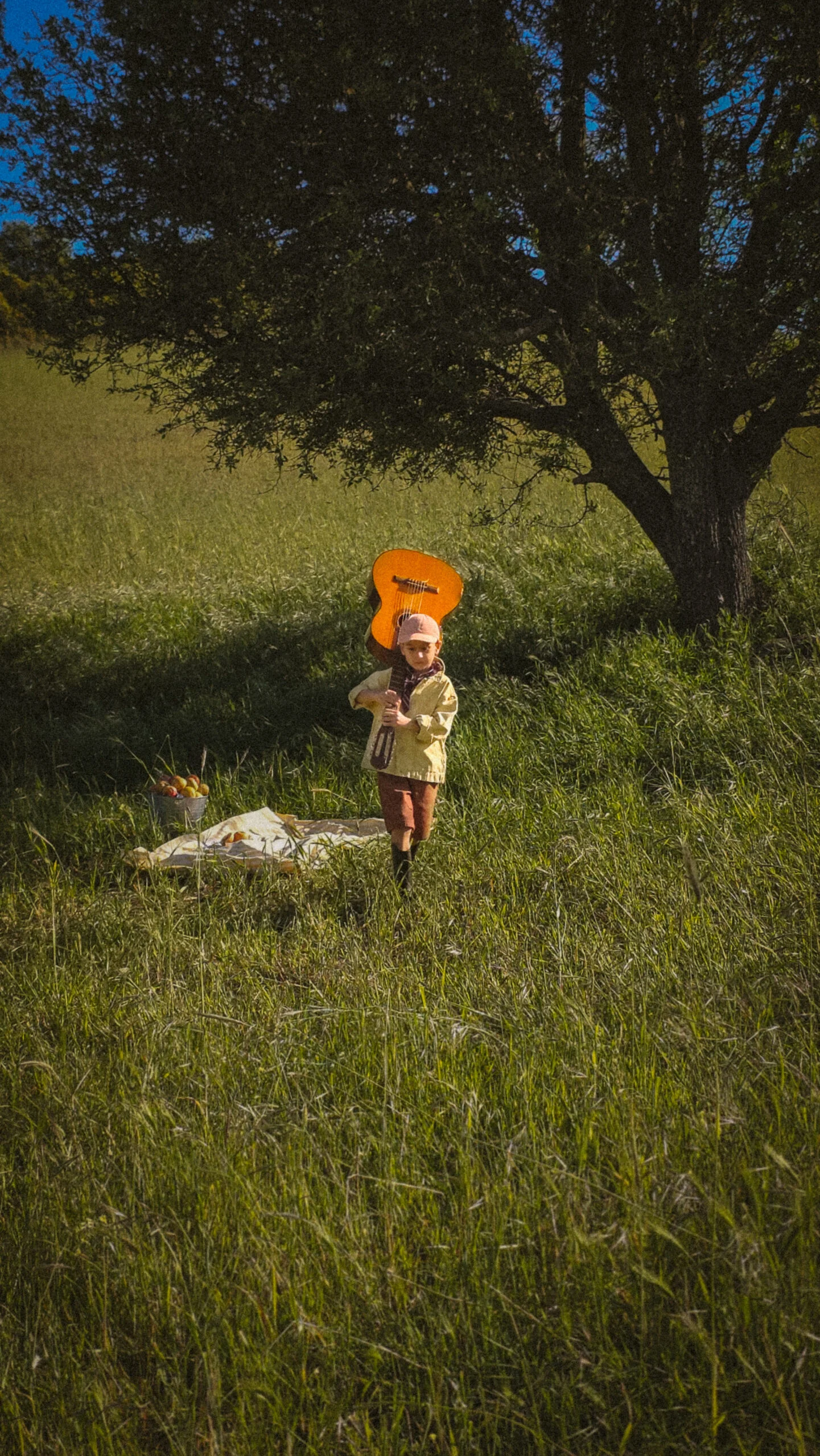
III. The apples were chosen one by one. He takes this seriously the choosing. Which ones are right for an afternoon in a field. Which ones will taste the way the day looks. He placed them on the blue and white plate with the quiet precision of someone who has never been told that this kind of care is unusual for a child.
Nobody told him it was unusual. And so it isn’t.
The guitar came next. He plays it badly and joyfully, which is the only honest way to play guitar in a field in spring when the horses are nearby and the light is doing what spring light does in the late afternoon going golden and unhurried, as if it too has nowhere else to be.
He played for a while. The horses grazed. The grass moved. Nothing happened, and it was exactly enough.
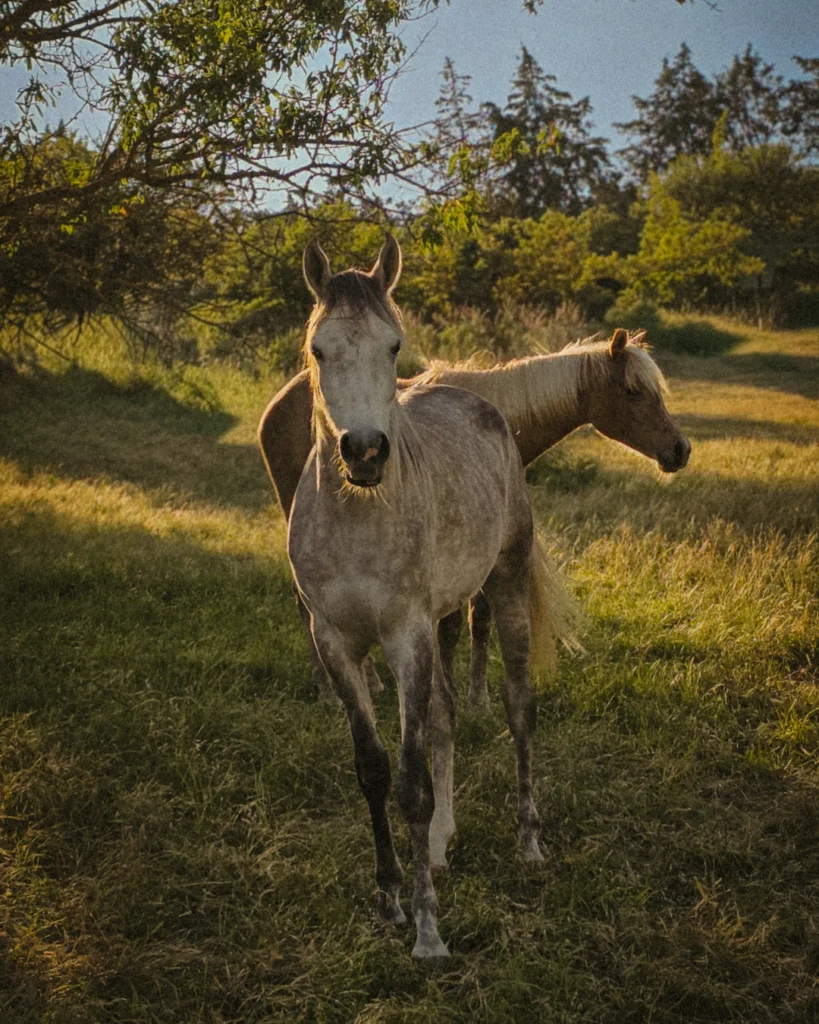
IV. The grey one came first, the way it always does. Straight and unhurried, looking at him with eyes that hold a kind of knowledge not wisdom, not the human kind but the older, quieter knowledge of a creature that has lived close to the ground and learned what that means.
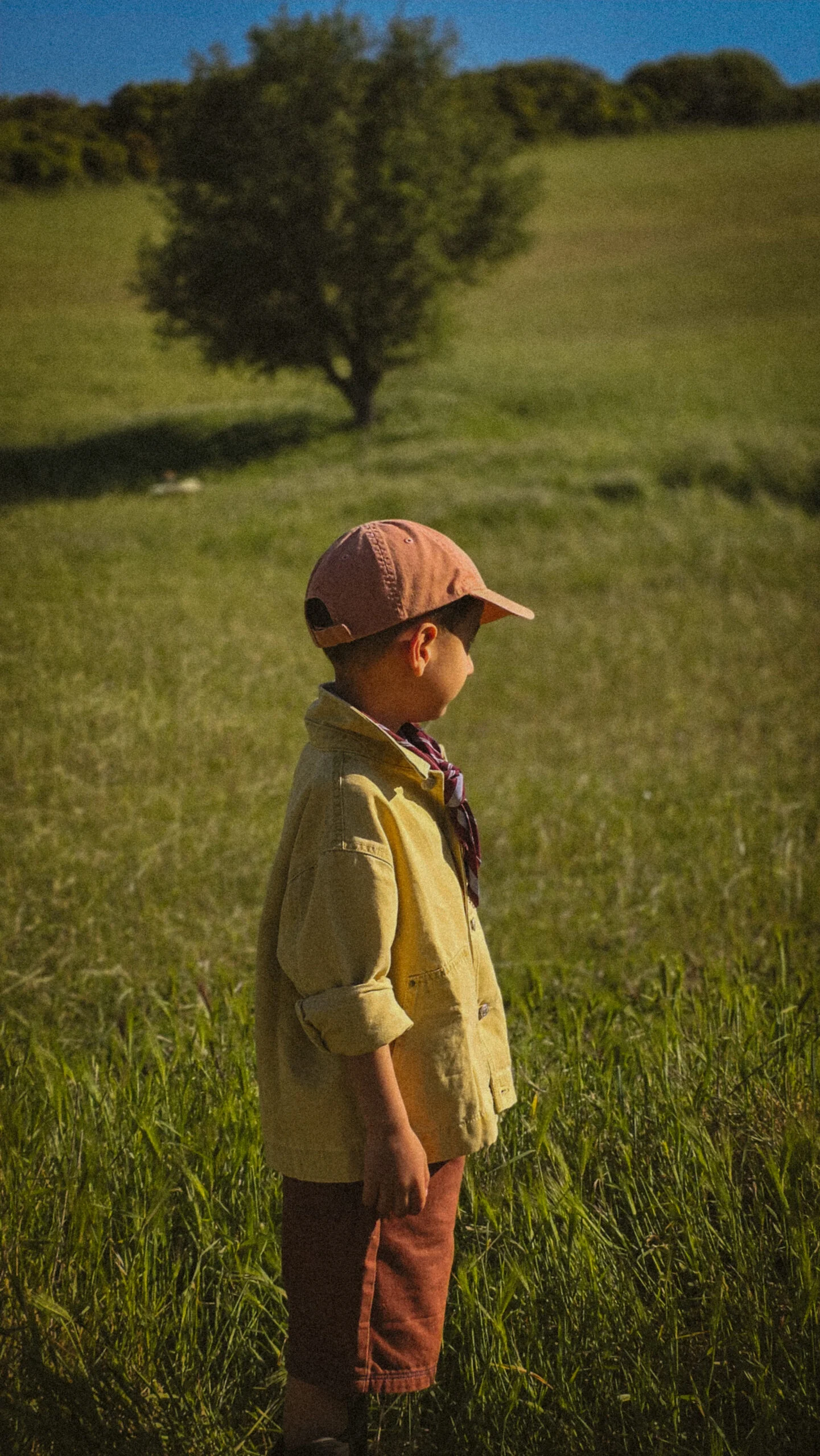
He stood still. He has learned this the slow way, over many afternoons in this field, through trial and the particular stillness that comes after you have startled a horse once and decided never to do it again. Stillness is the entry point. The first word of a language that has no other words, only gestures, only presence, only the gradual closing of distance between one heartbeat and another.
They came around him eventually the grey, the dark one, the foal that stayed just a step behind its mother like a question that hasn’t yet decided to be asked. He was simply there, among them, in the yellow-green field, small and still and completely at home.
This is the thing about growing up near animals that move free: you learn early that the world does not revolve around you. That there are other rhythms, older and less negotiable than yours. And instead of making you feel small, it makes you feel held by something vast and indifferent and, for that very reason, completely trustworthy.
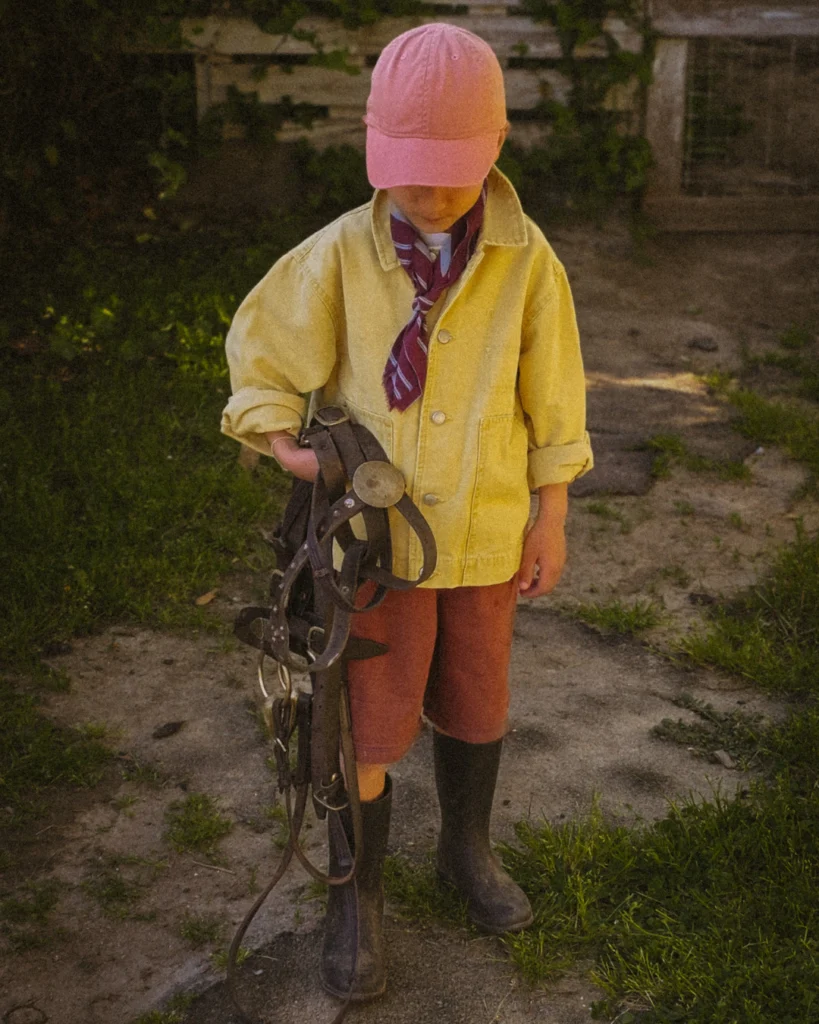
He picked up the bridle from the wall at some point. Held it the way you hold something you are not ready to use yet but need to understand feeling the weight of it, the leather warm from the sun, the metal cool underneath. A bridle is a question. He is still working out the answer.
The afternoon ended the way afternoons end here without announcement, without hurry. The light went. The horses drifted back toward the far end of the field. He ate the last apple standing up, looking at nothing in particular, which is the best way to look at a field when the day is almost done.
He untied the bandana from the post. Tied it back around his neck. Picked up the guitar and the blanket and the empty plate. Walked back up the road.
The field stayed as it was. The horses stayed. The post stood bare.
Tomorrow he will tie it there again.
Credits
Photography by Growing Creative Sprouts
Art Direction by Dad
Garments by Growing Creative Sprouts